What the installation includes
- Load calculation. The Ontario Electrical Safety Code sets a method for adding up a house's demand: floor area, heating, cooking, water heating, air conditioning and other fixed loads, plus the charger. The result decides whether the existing service carries it.
- A dedicated circuit. A new two-pole breaker in the panel and a cable or conduit run to the parking spot, sized to the charger's rated current plus the continuous-load margin the code requires.
- Mounting and connection. The charger is fixed to the wall or a post, connected, and set up to the current the circuit allows. Some units have an internal setting for this; it has to match the breaker.
- ESA notification and inspection. An EV charger circuit is reported to the Electrical Safety Authority before the work starts and inspected when it is done. This is part of the job.
- A labelled panel. The new breaker is identified in the directory so the next person at the panel knows what it feeds.
Which charger?
We do not sell or endorse a brand. Bring the model you have chosen, or say you have not chosen yet and we will size the circuit for the common 40 A and 48 A units. The charger's rated current sets the circuit size, so it is the one detail that matters most.
Level 1 is still an option
A standard 120 V receptacle on its own circuit charges slowly but reliably, roughly enough for a short daily commute. For a second car or a plug-in hybrid it is sometimes the sensible answer, and far cheaper.
Circuit size and charging speed
A charger draws continuously, so the code requires the circuit to be rated above the charger's current. These are the usual pairings.
| Charger setting | Circuit and breaker | What it means at home |
|---|---|---|
| Level 1, 12 A at 120 V | 15 A or 20 A dedicated circuit | A few kilometres of range per hour. Fine for plug-in hybrids and light daily driving. |
| Level 2, 32 A at 240 V | 40 A two-pole breaker | A full overnight charge for most cars. The common choice on a 100 A service. |
| Level 2, 40 A at 240 V | 50 A two-pole breaker | Faster overnight charging. Often the sweet spot on a 200 A service. |
| Level 2, 48 A at 240 V | 60 A two-pole breaker | Hard-wired only. Worth it for a large battery or two cars sharing one charger. |
Will your service carry it?
This is the question to settle before anything is bought. The honest answer depends on the service size and on what else in the house runs on electricity.
200 A service
Common in Vaughan houses built since the 2000s, including most of Patterson and the newer parts of Maple. A 40 A to 60 A charger circuit normally fits without changes, as long as the panel has two free slots.
100 A service, gas heat and gas stove
Typical in Thornhill, Concord and older Maple. The calculation often works for a 32 A or 40 A charger. If the panel is full, a subpanel or a tandem-breaker arrangement can make the space without a service change.
100 A service with electric heat, range and dryer
Usually over the line on paper. There are two routes: an EV energy management system that pauses or throttles charging when the house is near its limit, which the code allows and which is cheaper than a service change; or a 200 A upgrade, which also makes room for a heat pump or an induction range later. How a service upgrade works.
Where the charger goes
- Attached garage: the simplest case. The panel is often on a shared wall and the run is short.
- Driveway: an outdoor-rated charger or receptacle, cable routed through the house or along the exterior, mounted where the cord reaches the port without crossing a walkway.
- Detached garage or carport: an underground run in conduit, trenched to the depth the code requires. Trenching is usually the largest part of the cost.
- Condo or townhouse parking: depends on the building's electrical layout and the condominium corporation's rules. Ask before buying a charger.
What to have ready
- A photo of the panel with the door open, including the main breaker's rating.
- The charger model, or a note that you have not chosen one.
- A photo of the parking spot and the wall or post where the charger would go.
- What else is electric in the house: heating, water heater, range, dryer, air conditioning, hot tub.
- Anything you plan to add in the next few years, such as a heat pump or a second EV. It changes the recommendation.
With these, most quotes can be confirmed in one visit, and some without one.
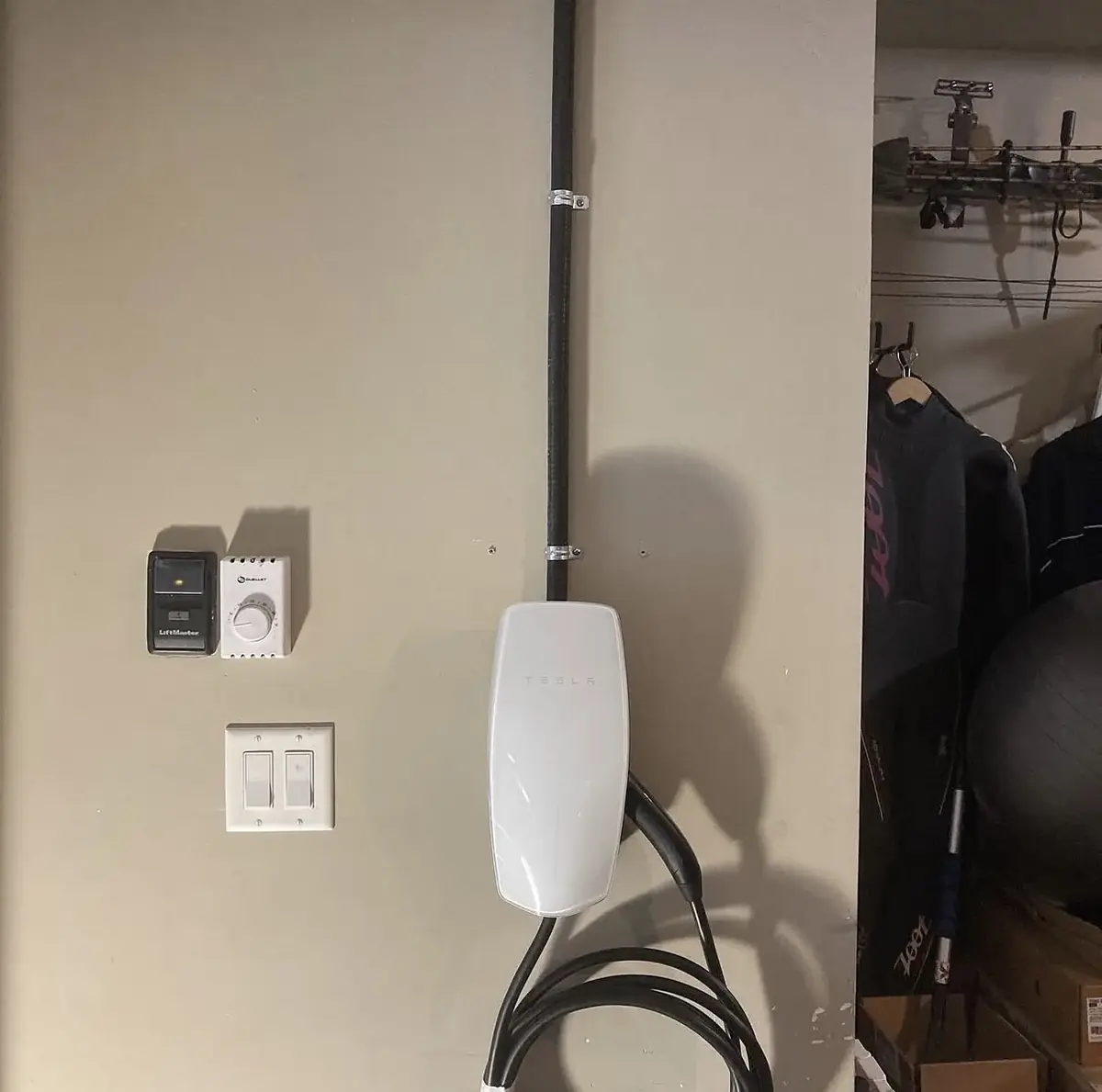
Recent installs
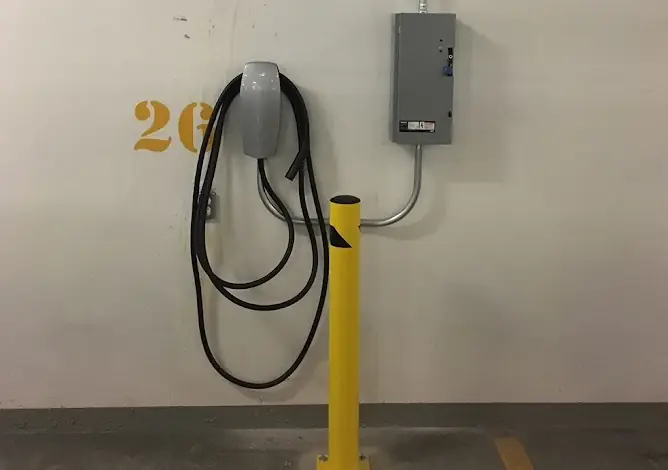
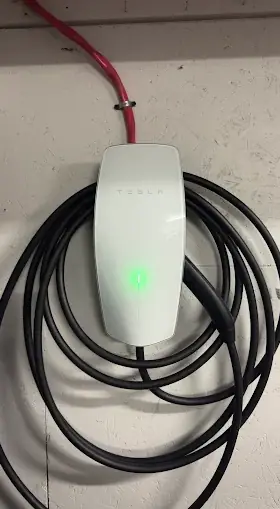
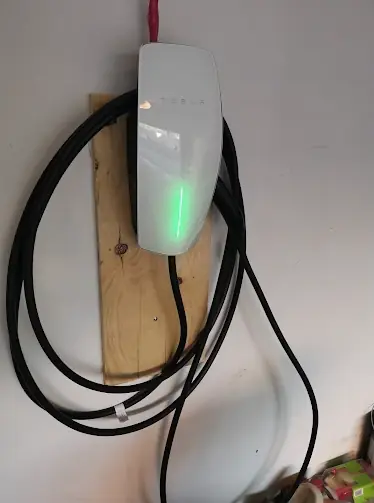
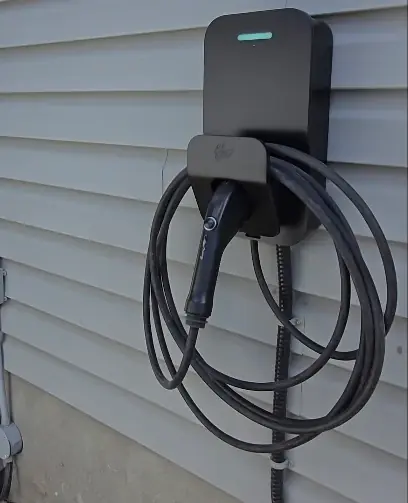
Four chargers in four different spots: underground parking, two garages and an exterior wall.