What a panel assessment looks at
With the cover off, a panel tells you most of what you need to know. We check the main breaker rating and the service conductors feeding it, the condition of the bus and breaker terminations, whether conductors are sized to their breakers, whether any breaker is double-tapped, and whether anything shows heat, corrosion or moisture. Then the load calculation goes on paper: what the house draws today and what you plan to add.
You get a plain written answer: the panel is fine; the panel needs space; the service needs capacity; or something inside is a safety problem. Each has a different and differently priced fix, and only one of them is a full service upgrade.
Signs you are at the limit
- Every slot is used, often with tandem breakers squeezed in.
- Breakers trip when large loads overlap: oven, dryer and air conditioning on a summer evening.
- You are adding an EV charger, heat pump, induction range, hot tub, sauna or a basement kitchen.
- The service is 60 A, or 100 A in a house that has gone mostly electric.
- Fuses, or a breaker type with a documented history of failing to trip.
- Warmth at the panel cover, buzzing, or a directory that nobody trusts.
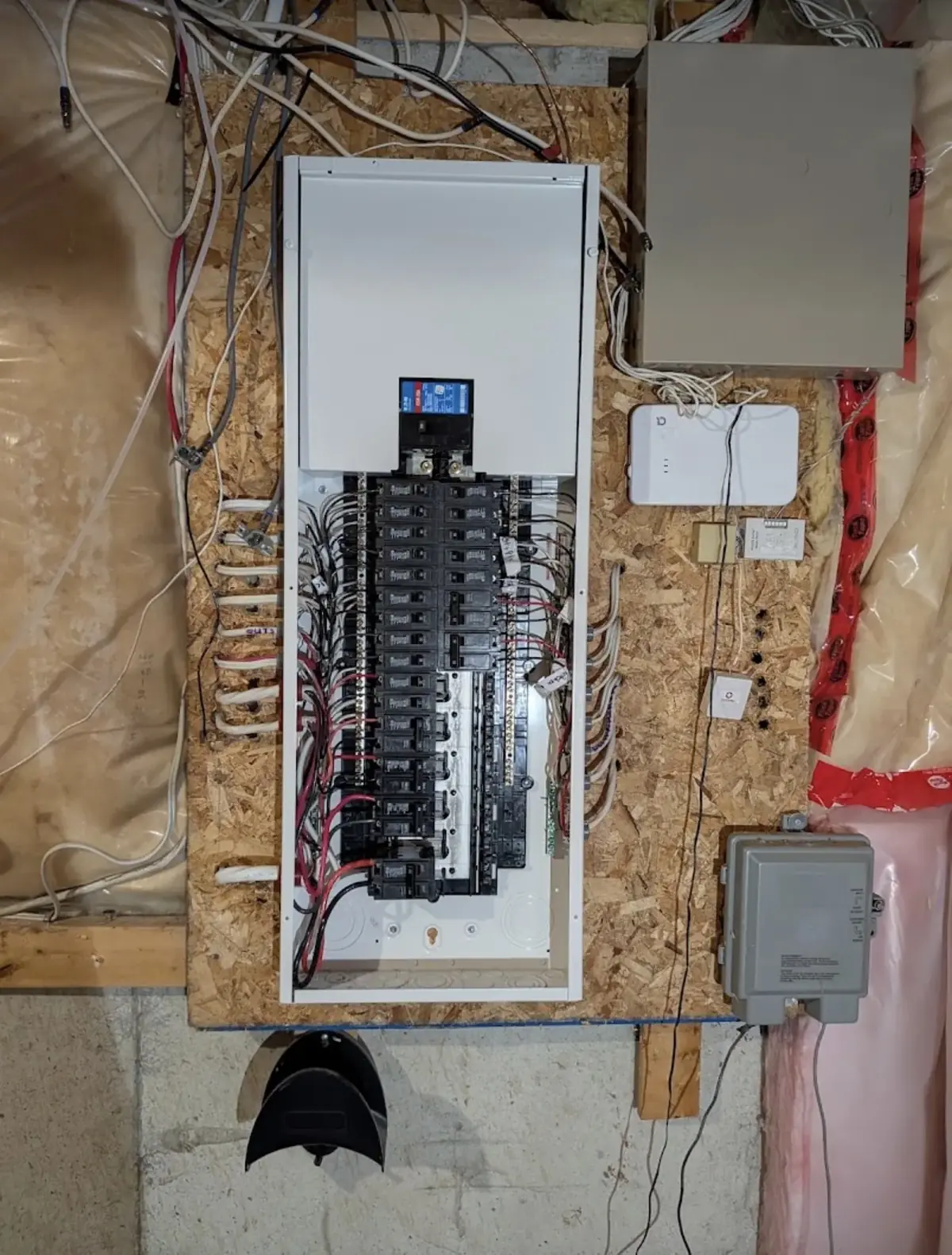
Service upgrade: 100 A to 200 A
A service upgrade replaces the panel and, where needed, the meter base, mast and service conductors, so the house can carry more load. In Vaughan the utility is Alectra Utilities, and a service change needs them to disconnect and reconnect at the street or the pole. That date is booked in advance and sets the day of the swap.
Assessment and written scope
Existing service size, the condition of the mast, meter base and grounding, the panel location, and what you plan to add. If the panel has to move, say so early: clearance rules in front of a panel and restrictions on certain rooms are a common reason.
ESA notification
The work is reported to the Electrical Safety Authority before it starts. The inspection at the end is part of the job.
The swap
New panel and main breaker, new meter base and conductors where the old ones are undersized or worn, existing circuits moved over, checked for correct breaker sizing and labelled. Grounding and bonding are brought to current requirements, which on an older house often means a new ground electrode.
Inspection and reconnection
ESA inspects, Alectra reconnects, and every circuit is tested under load before the directory is finalized. The power is typically off for most of a working day.
Not every full panel needs a bigger service
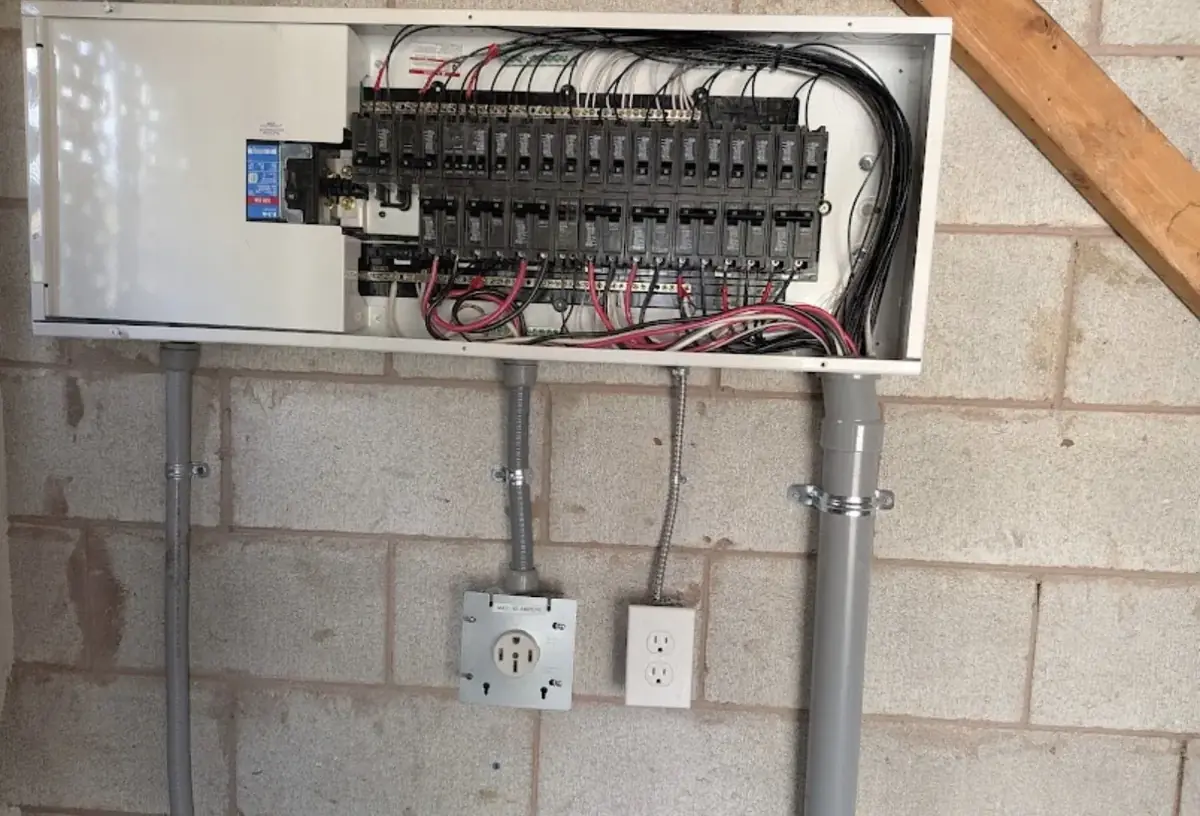
If the load calculation says the capacity is fine but the slots are not, a subpanel fed from the main panel, or a larger panel on the same 100 A service, is often the better answer. The calculation decides, not the breaker count.
Subpanels and new circuits
A subpanel is a second panel fed by one large breaker from the main. It is the usual answer for a detached garage, a basement apartment, a workshop, or an EV charger far from the main panel, and it keeps the branch circuits short.
New dedicated circuits are smaller jobs with the same care: a 240 V circuit for a range, dryer, air conditioner, hot tub or sauna; 20 A circuits for a kitchen counter or a workshop; a 120 V circuit for a freezer, sump pump or water treatment unit so it is not sharing with the lights. Each is sized to the load, protected as the code requires, and added to the directory.
Smaller panel work
Replacing a failed breaker, adding arc-fault or GFCI protection to an existing circuit, correcting double-tapped breakers, and rewriting a directory that is wrong. Each still means the cover comes off and the rest of the panel gets a look while it is open.
More recent work
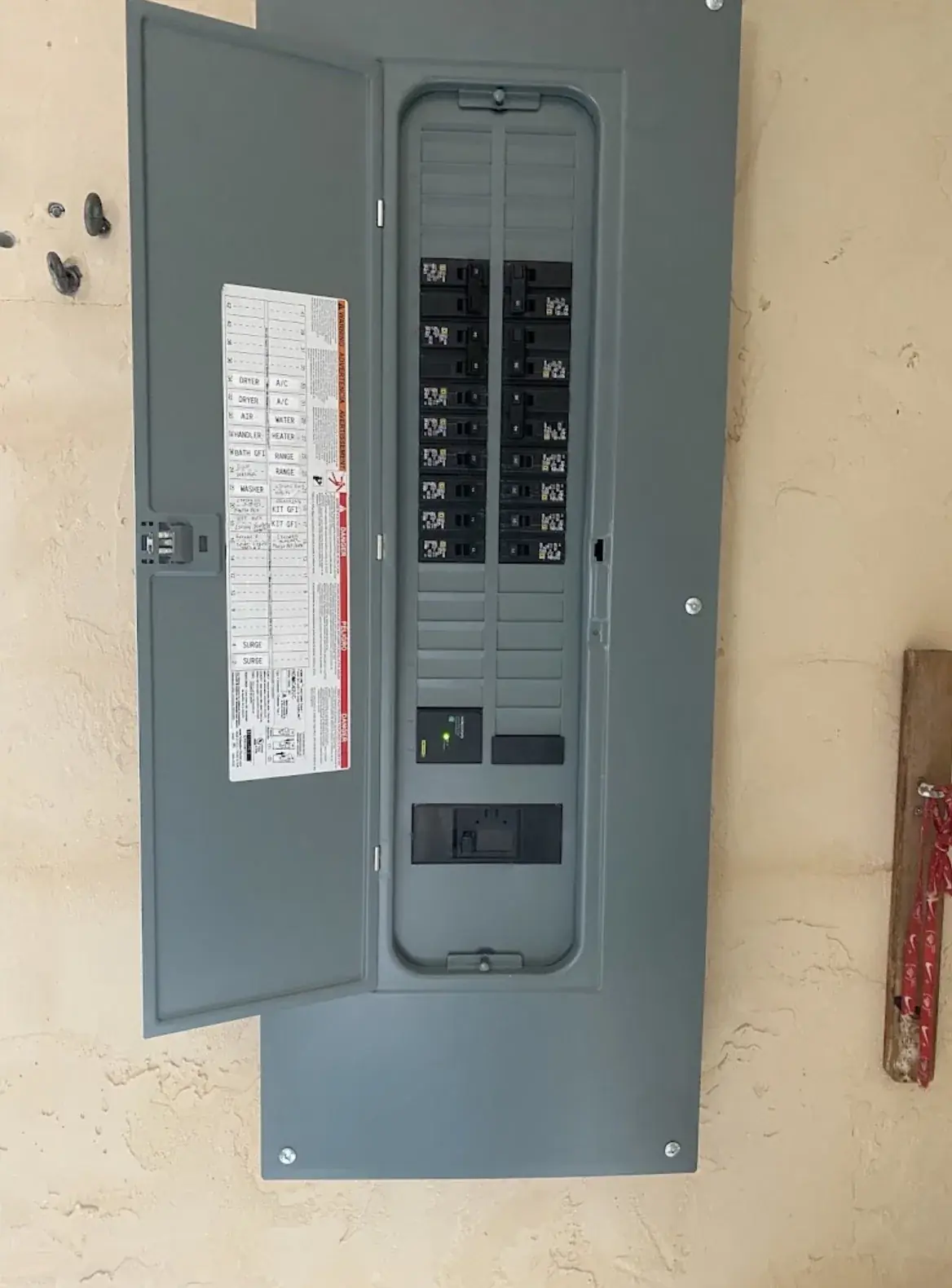
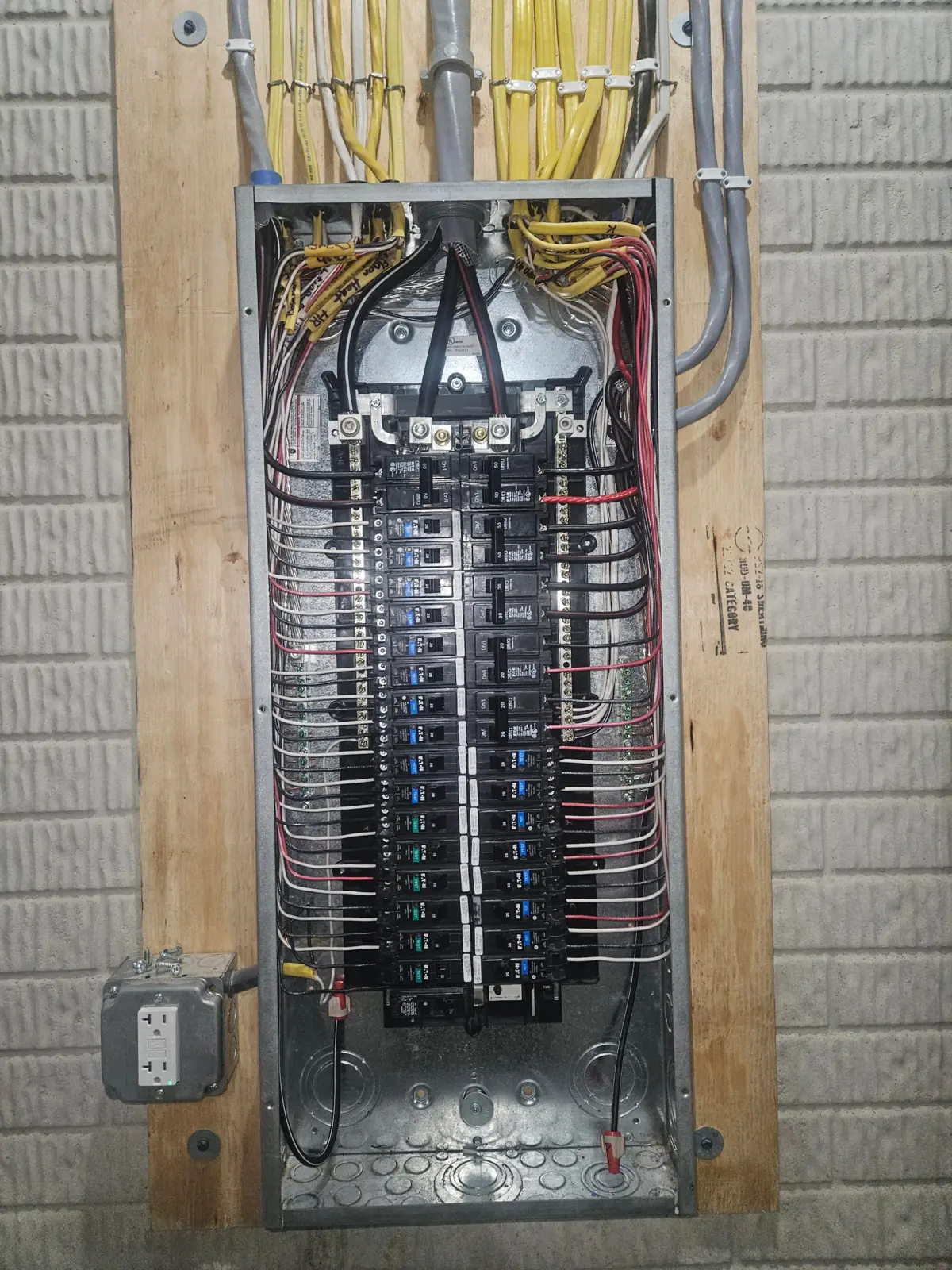
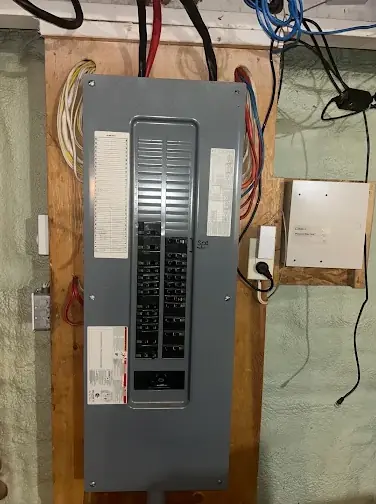
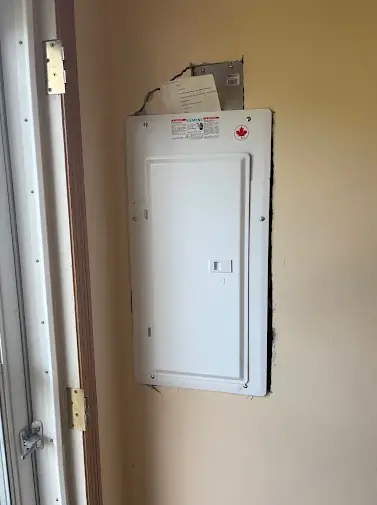
Three panels at different stages: cover off during work, cover on with a directory, and a replacement waiting for the drywall patch.
Panel questions
Does a panel upgrade fix old wiring?
No. It replaces the equipment at the panel, not the branch wiring in the walls. If the house has aluminum branch wiring or knob-and-tube, that is a separate finding and we tell you what we see.
Can the panel move to another wall?
Sometimes. Relocation means extending or re-running every circuit, so it is quoted separately. It is usually done because the current location breaks clearance rules or is in a room where a panel is not allowed.
Do I need to talk to Alectra Utilities myself?
Normally not. The contractor arranges the disconnect and reconnect as part of a service change. You may need to be home to give access to the meter.
Will a bigger service lower my bill?
No. A 200 A service lets you draw more at once; it does not change the rate or the amount you use. The reason to upgrade is capacity and safety, not cost.